“The Bridge at Remegan” starts WW3. A Checkpoint Charlie Overview
It’s been a long time coming since Pete first mentioned the idea of Checkpoint Charlie, but here it is! A surprise addition to the 2025 line up, but a welcome one.
What is Checkpoint Charlie
Firstly, some in the audience will no doubt want to know what WW3:Checkpoint Charlie is. If WW3: Team Yankee covers an alternative 1985* where the Cold War goes hot, then Checkpoint Charlie does the same thing but in the 1960s/70s. This earlier time frame allows the ‘Nam and Fate of a Nation (FoaN) ranges to also be bought into the fold, providing a unified time frame.Compared to WW3:Team Yankee, the tanks are not the ultra-electronic death machines of the 1980s**. Ranging is done by ranging gun, reticule markings or stereoscopic rangefinders, Stabilisation is not a standard fit, and night vision is very much passive infra-red than WHOT/BHOT thermal.
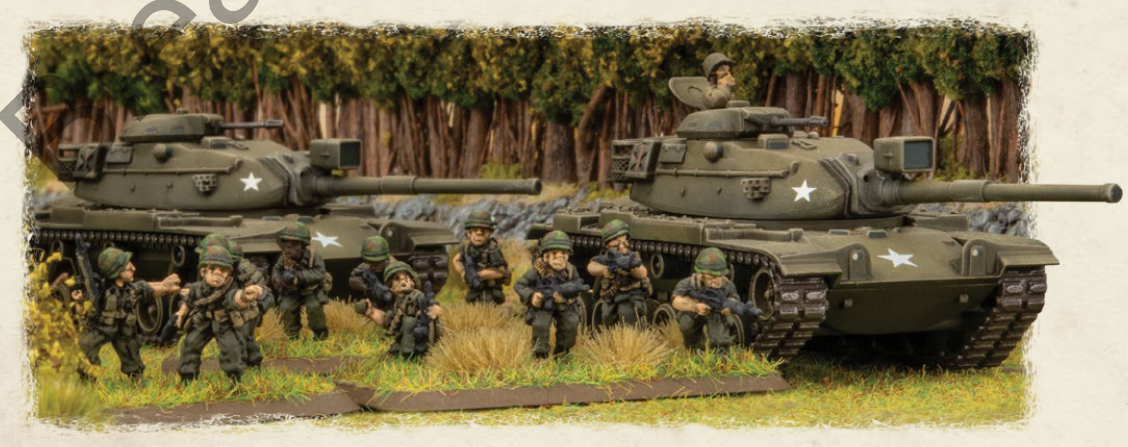
That said, a lot of the kit is familiar, if earlier in its life cycle. Chieftains and T-64 look like they do to TY players but, certainly for the Chieftain, its movement and gun profile feel very different. The T-55 is still very much a T-55, just definitely without the benefit of add-on BDD armour or a barrel launched missile.
What that gives us is a game that should play differently to Team Yankee, less sweeping manoeuvre as Leopard 2 engage on the move, and more move-shoot-move like a hyper lethal game of Flames of War. Those who played FoaN will know what I mean by this.
One thing to note here is that, as I understand it, Checkpoint Charlie is something of a departure from previous TY incarnations as it has no hard copy book. The PDF explains the notional background of this fictional 69/70s period (more below) rules differences to Team Yankee, army lists for five of the major nations in the war (US, UK, USSR and West and East Germany) and that’s your lot. A cynical man may see Checkpoint Charlie as a late change from the substitute bench to make up for Early War still being in the changing room with a hang over, using models already to hand, plus a few new sculpts. However, I am just glad to see it here and care little for the why of it.
“Starring Robert Vaughn as Casus Belli”
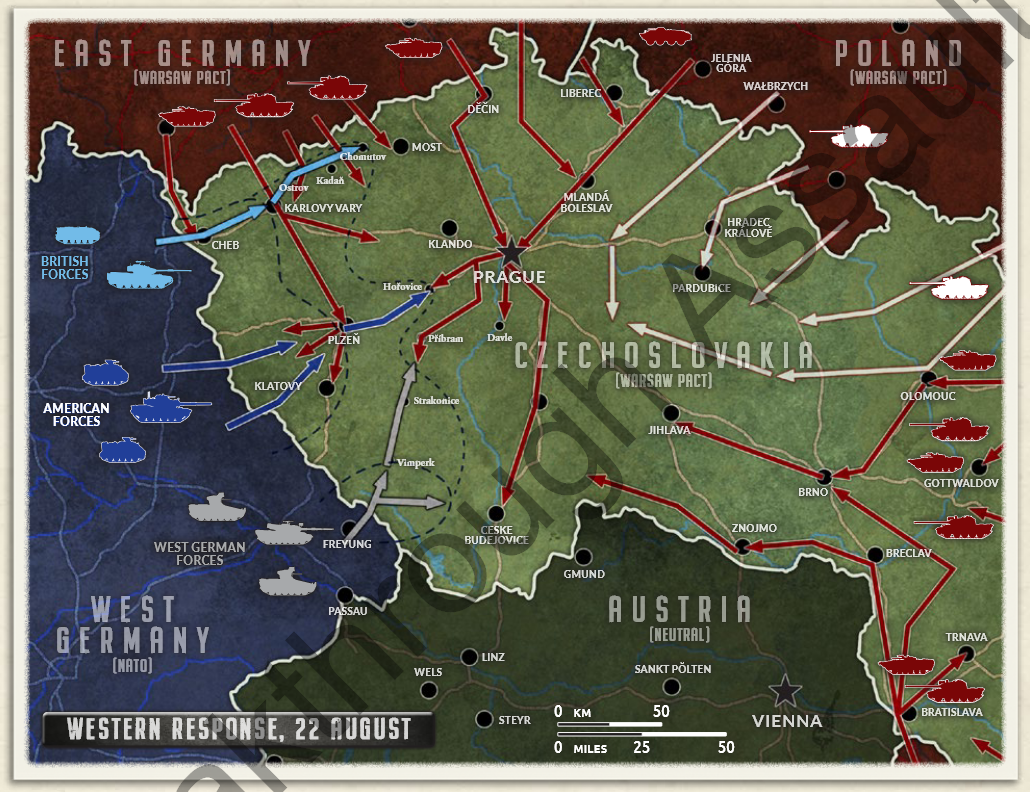
The title of this article is not entirely wrong. Check Point Charlie uses the Warsaw Pact invasion of Czechoslovakia in 1968 as a leap off point. In our reality, the western powers largely grumbled but, much like Hungary the decade before, sat on their hands for fear of a nuclear war. In Checkpont Charlie, the grumbling is more intense…
…then the Soviets stumble on the film set for “The Bridge at Remegan”, being recorded in Czechslovakia at the time, and assume the column of Chaffee ahead of it is a NATO intervention and decide to ask questions at the end of a 115mm shell. The death of the cast and crew galvanises the west to do something, leading a NATO force to enter the country and race to Prague. WW3 has started.
Honestly, anyone aware of the impact of the 1968 invasion on the filming of “The Bridge at Remegan” will appreciate an obscure piece of Hollywood trivia being weaved into the narrative*** and it does give a, still tenuous, reason for why NATO would intervene.
The background section has maps of the divisions of Berlin and the historical invasion of Czechoslovakia, before proceeding to outline the NATO counter-invasion. As always, it’s well presented.
The books also list a few other scenario ideas for players to consider should they want to do something of their own…
Rules of War and dusting Off the Miniature Cupboard
The Checkpoint Charlie PDF uses the Team Yankee rulebook so the rules section is really a recap of unit special rules.
The first section details how to integrate FoaN and ‘Nam into Checkpoint Charlie. It’s pretty straightforward as the points are all aligned. ‘Nam just doesn’t use its missions.
One thing to note is that the ‘Nam US forces are entirely isolated from the Checkpoint Charlie US. As far as I can tell, the ‘Nam US can’t be as formation support or have their formation in a Checkpoint Charlie force.
The rest of the rules section covers the Aircraft, Weapon, Equipment and Special Rules, mostly repeating the relevant rules from Team Yankee but adding a few new rules such as “Back-blast” to deal with the firing signature of recoilless guns. There is also a new rule section to cover gun teams.
The Toy Box
We are going to look at each nation independently, but the PDF gives us the five major players. For NATO, we have the USA, Great Britain and West Germany. For the Warsaw Pact, we have the Soviet Union and East Germany.
Each nation has three or more tank formations and at least one infantry formation. These are then backed up by a selection of anti-air, anti-tank and artillery systems, including towed guns.
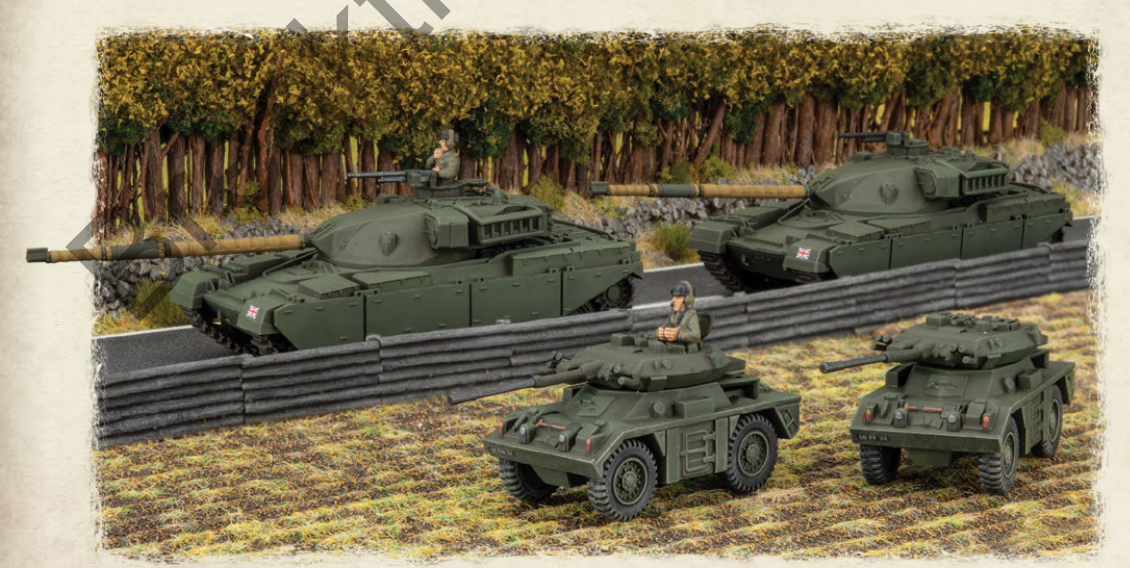
The equipment is all in line with the 1965-1975 bounds of the time frame, though some of it just squeaks in across the line (looking at you M47 Dragon). Tanks are generally generation 1 (immediately post-war examples like Centurion and T-55, albeit upgraded), generation 2 (105+mm main guns) like the Leopard 1 and T-62 and a few of the gen 2+ bridges to what would come after, sporting 120+mm main guns and, in the case of the T-64, early composite armour. Tanks like the M-60, Chieftain and T-64 are all similar yet different to their Tean Yankee equivalents. Laser rangefinders and DU rounds are all out, though they so all have “Accurate” The M-60 hasn’t been through all its upgrades, so lacks modern stabilisers and its ROF 2 moving RoF, whilst the Chieftain is distinctly pre-Magic Totem and so has the earlier, even more under-powered, L60 engine and a distinctly slower set of dash speeds.
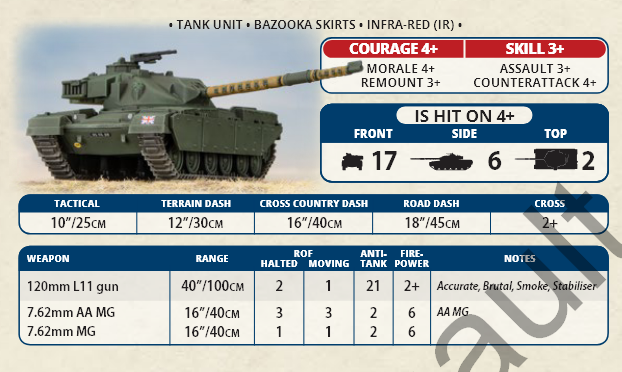
The T-64 comes out the best, as it still has its TY movement rate and BDD armour. The T-72, once again, is over-shadowed by its premier sister. Its move and gun are much the same, but the original T-72 Ural model lacks the BDD armour that would come with the late 70’s A variant.
There are also a few historical units that were still lingering in reserved units. NATO has the 120mm armed M103 and Conqueror heavy tanks. These were developed in response to the western allies pooping their pants when the IS-3 rolled through the Berlin victory parade and realising the 90mm and 17 and 20 pdr guns weren’t going to cut it. Never as numerous as the early main battle tanks like the M47 and Centurion, they instead supported the lighter companies with longer range fire. The arrival of the L7 105mm on the main battle tanks and their general weight issues saw them disappear from the mid 60’s onwards.
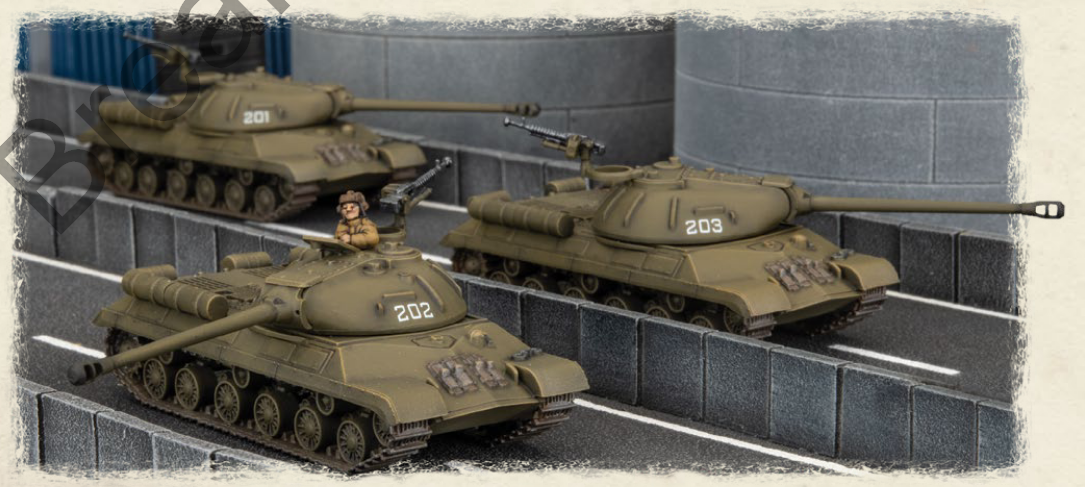
It wasn’t just the NATO heavies that were increasingly archaic. The tank that inspired the NATO 120mm heavies, the IS-3 was still in some second line units and its successor, the T-10M was still a first line tank. However, it was now out-gunned, out ran and only barely out-armouring the new T-64s that were a good deal lighter!
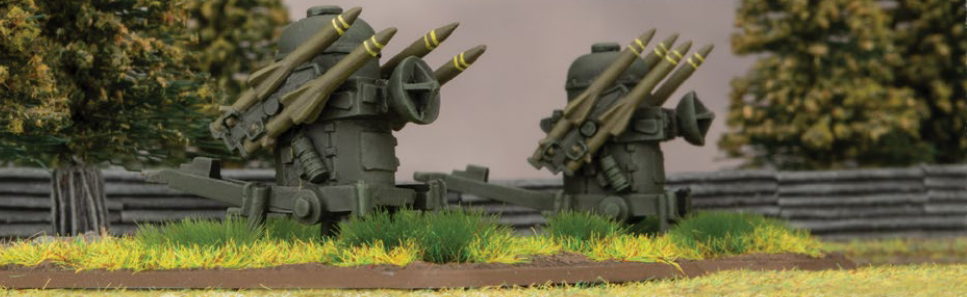
Infantry are very similar to their TY equivalents, just lacking the newer ATGW of the 80s game. The US M113 infantry have their Dragons (but can’t *not* have them, which seems an oversight for playing the majority of the period) but the British don’t have their Vickers Vigilant missiles, save the Ferret mounted version. They do have the ever reliable Carl Gustav which, in a world where only one tank has BDD armoured and nothing has ERA, should be good enough. The Soviets rock the AKM rather than AK-74 and have the AT-3 Sagger as their ATGW, able to reliably defeat all but the NATO heavies and the Chieftain.
One disappointment is the air war. There are two aircraft in the game; the ubiquitous F-4 Phantom for NATO and the SU-22 Fitter for the Soviet Union. The F-4s are all subtly different; the US has Napalm in addition to 1000lb bombs and CBU-52 cluster bombs, the British sport SNEB rocket pods to do much the same as the CBU-52, but better, whilst the West Germans apparently don’t want to set the world afire and so leave the Napalm at home. The East Germans have to ask the Red Air Force for support. Both aircraft are cool, don’t get me wrong, but I was looking forward to some unique flavour like RAF Hunters and West German Fiat G.91s.

Similarly, helicopters are scarce. The only NATO attack helicopter is the AH-1, mostly in a Hog config but with optional TOW; the UK don’t have their AS.11 equipped Westland Scout helicopters, but instead get support from the USA. The Hind appears in the Soviet force and also supports the East Germans, but sports the earlier AT-2 Swatter missile, still with an impressive AT21, better than the TOW! It retains the Passenger 2 troop capacity but doesn’t have an air assault platoon attachment option.
Conclusion
Having been teased for a few years, does Checkpoint Charlie stick the landing now it’s finally here?
In general, I think so. Don’t get me wrong, it’s clear that this is something of a scramble; the PDF rulebook, re-use of aircraft across the nations (thank god the F-4 was so widely used!) and limited new plastics (really thought we might finally get a plastic PT-76/BTR-50 kit) point to this. But the core rules are generally sound, and the range covers off most things I expected to see. For me, this is something I can get excited about. Something new and not just a third go at the Battle of France (I was playing it before it had books, who else remembers the old v1 “get you by” PDF?).
One point of concern is integrating ‘Nam into Checkpoint Charlie. There is a dearth of anti-tank for both the “free nations” and the NVA, which means they may struggle in the mechanised warfare of Checkpoint Charlie. FoaN likely suffers less from this, especially with the Yom Kippur based forces.
Update – When I started writing this article, I finished up with some hope that Battlefront might explore Checkpoint Charlie further, adding in key NATO nations like France (sitting outside of NATO command but still a member), Canada and the low countries. As I write this, Battlefront have confirmed that there will be more Checkpoint Charlie including exploring some nations not in the 1980s game. Exciting stuff!
*give or take 15 years or so, depending on what models Battlefront want to shoehorn in…
** the M60A2 is an electronic death machine, but in reality It’s somewhat up for grabs if that was more for the crew than the enemy.
*** in reality the film crew amd actors made a run for the border leaving equipment, film and military, behind. The soviets made use of the Chaffee to justify intervening to stop a US plot, but the new Czechoslovakian government did eventually give it all back. Ironically, the production of the film had insurance to cover for the risk of invasion, but the insurers weaselled out of it on the basis it’s not an invasion when the country being invaded’s own allies do it.
2 comments